



Travel Yoga Mat vs Full-Size Mat: Which Do You Actually Need?
The travel yoga mat category is one of the most purchased — and most returned — in yoga equipment. People buy them for trips, use them for a week, and then quietly replace them with a full-size mat at their destination or go without yoga for the rest of the holiday.
That doesn't mean travel mats aren't useful. It means they're genuinely right for a specific type of practitioner, and genuinely wrong for others. This guide walks through the actual trade-offs so you can make a clear-headed decision before you buy.
🧘 Shop All Yoga Mats
Travel, standard, eco, premium — the full yoga mat range at EMP Industrial. Browse by style and use case.
→ Browse All Yoga Mats →What Makes a Travel Yoga Mat Different
Travel yoga mats are defined by one primary characteristic: reduced weight and pack size achieved through reduced thickness. Standard yoga mats sit at 4–6mm thick. Travel mats typically range from 1–2.5mm — thin enough to fold rather than roll, or roll to a compact diameter that fits inside or straps to a bag. See the travel yoga mat collection at EMP Industrial for current options.
Everything else in the travel mat experience flows from that one decision. Thinner means lighter. Thinner also means less joint cushioning, often different grip characteristics, and a noticeably different surface feel underfoot.
| Spec | Full-Size Mat | Travel Mat |
|---|---|---|
| Typical thickness | 4–6mm | 1–2.5mm |
| Typical weight | 1.5–3kg (varies by material) | 0.5–1.5kg |
| Pack size | Standard yoga mat cylinder | Foldable or compact roll |
| Cushioning | Good to excellent | Minimal to light |
| Best floor surface | Works well on most surfaces | Best on hard, smooth floors |
Note: Specs vary significantly across products. Always check the specific mat listing for dimensions and weight.
The Real Trade-Offs: An Honest Assessment
Cushioning — the biggest compromise
This is where travel mats most frequently disappoint practitioners who aren't prepared. A 1.5mm mat feels almost like practising on the floor. For a gentle flow or seated meditation, this may be acceptable. For anything involving significant kneeling — lunges, Crescent, Camel, Pigeon — the absence of cushioning is immediately noticeable and can be painful on hard floors over a full session.
Grip — often better than expected, but different
Travel mat grip depends heavily on material. Some use natural rubber or TPE compounds that provide genuine grip. Others use thinner PVC that can feel slippery in early uses. If grip is critical — Vinyasa, Ashtanga — look specifically at travel mats with natural rubber or high-grip surface treatments, or plan to use a yoga mat towel on top.
Stability — travel mats can bunch and move
On carpet or uneven surfaces, thin travel mats can bunch or ripple during dynamic movements in a way that full-size mats don't. On smooth hard floors — hotel laminate, polished studio floors — they generally perform well.
Who Actually Needs a Dedicated Travel Mat
- You travel frequently — business travel or regular interstate trips where carrying your full-size mat is a genuine logistical burden on most trips, not occasionally
- You practise on your travels — not just intending to, but actually do; many mats are bought for travel practice that never happens
- Your practice style tolerates minimal cushioning — meditation, pranayama, gentle flows you'd practise on a studio mat anyway
- Weight or carry-on restrictions are real — if checking luggage is an option, a full-size mat rolled in a bag is manageable; checked luggage removes most weight constraints
- You want a secondary mat — many experienced practitioners keep a full-size mat at home and a travel mat for studio classes or outdoor practice
💡 The honest question: Ask yourself: have you consistently practised yoga on previous trips with a hotel mat or just gone without? If you usually skip yoga on trips, an expensive travel mat won't change that. If you practise on everything available, a travel mat genuinely improves the experience.
When Your Full-Size Mat Is Better — Even for Travel
- Long holidays with checked luggage — a quality mat strap or carry bag adds minimal bulk; a full-size mat gives you an excellent surface for weeks
- Extended stay in a new city — don't compromise your daily practice with travel mat limitations for an extended period
- Retreat or yoga-intensive travel — bring your best mat; this is not the context for travel mat compromises
- Beach or grass practice — cushioning barely matters on soft surfaces; any thin mat (or the studio's) is sufficient
If you take your full-size mat on trips, a yoga carry bag or strap makes it genuinely manageable rather than awkward to transport.
The Combination Approach — Travel Mat Plus Mat Towel
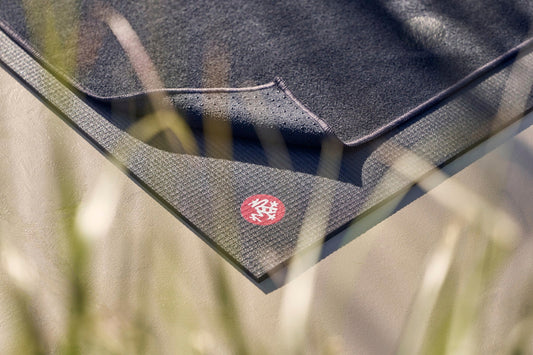
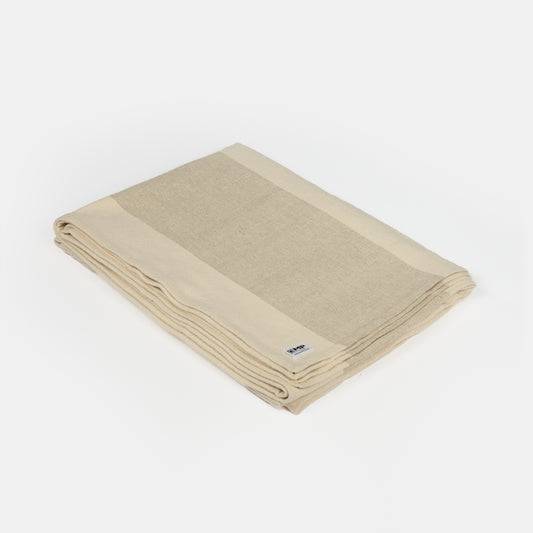
One practical solution for regular travellers: a quality travel mat plus a yoga mat towel (such as the Yogitoes). The travel mat provides the light portable base; the mat towel provides a consistent high-grip surface on top and can be hand-washed in a hotel sink. Together they weigh less than most full-size mats while performing better than the travel mat alone on hard floors.
This combination is particularly effective for high-sweat styles — Vinyasa, hot yoga classes at studios you visit — where the towel's moisture-activated grip addresses the travel mat's main limitation.
What to Look For in a Travel Yoga Mat
If you've decided a travel mat is right for you, browse the EMP Industrial travel yoga mat collection and prioritise these characteristics:
- Thickness of at least 1.5mm — thinner is genuinely problematic for most styles on hard floors
- Natural rubber or high-grip TPE surface — avoid cheap PVC travel mats that sacrifice grip in addition to cushioning
- Fold vs roll — folding mats pack flatter and smaller; rolling mats are more familiar in use; choose based on your luggage situation
- Full length — confirm it's long enough for your height; some travel mats come in shorter formats
- Compatible accessories — check that carry straps or bags are available from EMP to complete the travel kit
Travel Yoga Mats at EMP Industrial
Lightweight, foldable, packable — the full travel yoga mat range from leading brands. Australia-wide delivery.
→ Shop Travel Yoga Mats →Quick Comparison: Full-Size vs Travel Mat
| Situation | Best Choice | Why |
|---|---|---|
| Daily home practice | Full-size mat | Cushioning, stability, and longevity matter every day |
| Frequent business travel (weekly) | Travel mat | Genuine portability need; practise consistently on trips |
| Occasional holiday (1-2/year) | Full-size mat + strap | Travel mat rarely used; carry strap solves transport |
| Studio commute (daily) | Full-size (PRO Lite or similar) | Studio commute ≠ travel; a lighter full-size mat is the answer |
| Yoga retreat | Full-size mat | Best practice surface for intensive yoga travel |
| Hot yoga on a trip | Travel mat + mat towel | Light combined kit; towel compensates for thin mat's grip limitations |
Frequently Asked Questions
Can I use a travel yoga mat for daily home practice?
You can, but it's a compromise most practitioners notice quickly. For daily practice — particularly anything involving kneeling, low lunges, or extended floor work — a standard 4–6mm mat provides meaningfully better joint support. Travel mats are optimised for portability, not daily home practice.
What's the best material for a travel yoga mat?
Natural rubber or quality TPE travel mats provide the best grip-to-weight ratio. They're heavier than the thinnest PVC options but perform significantly better for dynamic practice. Browse the eco and sticky mat options to see what's available in travel formats.
Can I add a mat towel to a travel mat to improve the surface?
Yes — this is one of the most practical combinations for travel yoga. A travel mat plus a Yogitoes or similar mat towel gives you a lightweight, packable combination that performs well on hard hotel room floors and provides consistent grip regardless of the travel mat's own surface characteristics.
Is a travel yoga mat worth buying if I only travel a few times a year?
Probably not as a primary purchase. For occasional travel, using a studio mat or a carry strap for your regular mat is more practical. The investment in a travel mat becomes more justified for frequent travellers who consistently practise on the road.
Tags:
Previous
Yogitoes Yoga Mat Towel: When and Why to Use One Over a Standard Mat
Next
How to Maintain a Consistent Yoga Practice During Australian Winter